Motivational Interviewing
Motivational interviewing meets ambivalence with collaboration, not confrontation. It helps people find and strengthen their own reasons to change.
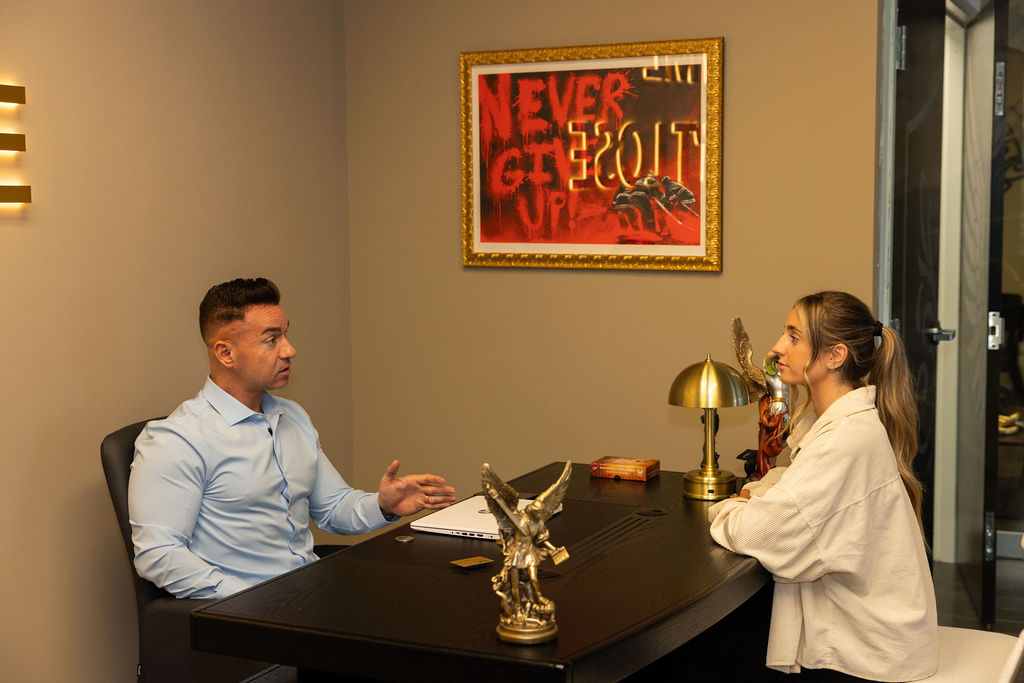
What motivational interviewing is
Motivational interviewing (MI) is a person-centered, directive counseling style developed by psychologists William Miller and Stephen Rollnick. The approach was first described by Miller in 1983, refined in a series of collaborative clinical research programs, and codified with Rollnick in the textbook Motivational Interviewing: Helping People Change, now in its third edition. It was developed specifically for working with ambivalence, the mixed feelings about change that almost every person in early recovery experiences.
The premise behind MI is straightforward and well-supported by research: people are more persuaded by arguments they make themselves than by arguments made to them. A clinician who confronts a reluctant client with reasons to stop using typically produces resistance, defensiveness, and entrenchment. A clinician trained in MI draws out the client's own motivations, explores their own ambivalence with curiosity, and reflects back what they hear. This technique produces change talk, the verbal expression of a person's own desire, ability, reasons, and need to change.
The spirit of MI
Miller and Rollnick describe MI not as a set of techniques but as a spirit: a way of being with another person that shapes how the techniques land. The spirit of MI has four interlocking qualities.
Partnership means the clinician is a collaborator, not an authority figure. The client is the expert on their own life. The clinician's job is to understand that life, not to correct it. Acceptance means the clinician holds an unconditional positive regard for the person separate from judgment about their behavior. This does not mean approving of the behavior. It means the person's worth is not conditional on their readiness to change. Compassion is an active commitment to the client's wellbeing and interests, prioritizing what serves them over what is convenient for the system. Evocation means the clinician draws out the client's own resources and motivations rather than installing new ones from outside.
The spirit matters because technique without it produces a hollow version of MI that people recognize and resist. Genuine MI is experienced as being heard rather than lectured, which is a different and more effective kind of encounter.
Ready to take the first step?
Admissions available 24/7. Most insurance accepted. Same-week start.
The core skills: OARS
The clinical skills of MI are often described by the acronym OARS. Each skill serves the broader goal of evoking the client's own motivation and building rapport.
- Open questions: questions that cannot be answered yes or no, that invite the client to explore and elaborate. 'What would need to change for things to feel different?' rather than 'Do you want to get better?'
- Affirmations: genuine recognition of the client's strengths, efforts, and character. Not praise for doing what the clinician wants, but real acknowledgment of qualities the client may not be seeing in themselves.
- Reflective listening: paraphrasing or restating what the client said to demonstrate understanding and to help the client hear their own words back. Complex reflections go slightly beyond the surface to name what is implied, inviting the client to confirm, correct, or explore further.
- Summaries: gathering up what has been said across a period of conversation to reflect it back as a whole. Summaries underscore change talk, link themes the client has raised, and signal that the clinician has been listening carefully.
How MI meets ambivalence at intake and in early treatment
Most people entering addiction treatment are ambivalent. They want to stop. They also do not want to stop, or do not believe they can, or are not sure the cost of changing is worth what they will gain. Both feelings are real and present at the same time. This is not a moral failure. It is the experience of ambivalence, and it is the state MI is designed to work with.
At intake, a clinician using MI does not begin by reviewing consequences, confronting denial, or building a case for treatment. The conversation begins with curiosity about the person's own experience: what brought them here, what they value, what they are hoping for, and what they are afraid of. This approach is not soft or permissive. It is strategic. A person who feels heard and not judged is more likely to stay in the room, to continue the conversation, and to begin accessing their own motivation for change.
In early treatment, the ambivalence does not resolve immediately. The desire to use coexists with the desire to recover for weeks and sometimes months. MI is used throughout the early phases of treatment to continue eliciting change talk, to acknowledge the difficulty of change without amplifying hopelessness, and to re-engage clients after a lapse or a difficult session without shame and without confrontation.
The evidence base for motivational interviewing
MI is among the most studied counseling approaches in addiction treatment. The research base spans decades, populations, and substances. Meta-analyses consistently find that MI produces meaningful improvements in treatment engagement, retention, and substance use outcomes compared to advice-giving, confrontation, and standard care.
MI has been studied specifically with alcohol use disorder, opioid use disorder, cannabis use disorder, and dual-diagnosis populations. It has been validated across individual sessions, group delivery, and brief intervention formats. The evidence also supports MI as a useful tool for re-engaging people who have relapsed and are ambivalent about returning to treatment, a common and clinically important scenario.
It is worth noting what MI does not claim to do. MI is not a cure for addiction and is not intended to replace skills-based modalities like CBT or DBT. Its function is to build the motivational foundation on which those skills can be practiced. A client who is not yet motivated to change will not benefit from CBT no matter how well it is delivered. MI creates the conditions in which the other modalities can work.
MI in the Archangel process
At The Archangel Centers, motivational interviewing is woven through the intake and early treatment experience, not delivered as a separate module. Clinicians trained in MI use the spirit and skills of the approach throughout individual sessions, in group facilitation, and in the conversations that happen at every transition point in the continuum.
MI is particularly active at intake, when ambivalence is highest, and after any setback or lapse, when re-engagement is most fragile. It is also the approach used in pre-admission conversations when a person or family member is calling to explore options but has not yet committed to entering treatment. The goal is always the same: to understand where the person actually is, to meet them there, and to help them access the motivation that is already present in them.
- Developed by William Miller and Stephen Rollnick, first described in 1983
- Spirit: partnership, acceptance, compassion, evocation
- Core skills: open questions, affirmations, reflective listening, summaries (OARS)
- Primary role: resolving ambivalence and building motivational readiness at intake and throughout early treatment
- Evidence: consistent positive findings across populations, substances, and treatment contexts in meta-analytic research
- At Archangel: woven through individual sessions, group facilitation, and transition conversations across the continuum
Frequently Asked Questions
Is motivational interviewing a standalone treatment?
Who developed motivational interviewing?
What is change talk?
How is MI different from confrontational approaches to addiction?
Is MI effective for all substances?
Talk With Our Admissions Team
Call our 24/7 admissions team or verify your insurance online. We will help you understand your options and the right level of care at The Archangel Centers.
(888) 464-2144Verify Your Insurance